AI automation has moved from buzzword to practical reality. The question for UK SMEs is no longer “should we use AI?” but “which of our manual processes can we automate first?”
When you build custom software, you have a unique advantage: AI capabilities can be designed into the system from the start, rather than bolted onto tools that were never built with AI in mind. Here are five workflows that deliver immediate, measurable value when built into bespoke business software.
1. Intelligent Document Processing
Most SMEs handle hundreds of documents monthly - invoices, purchase orders, delivery notes, contracts, customer enquiries. Someone reads each one, extracts the key information, and types it into the relevant system. It’s slow, error-prone, and nobody enjoys doing it.
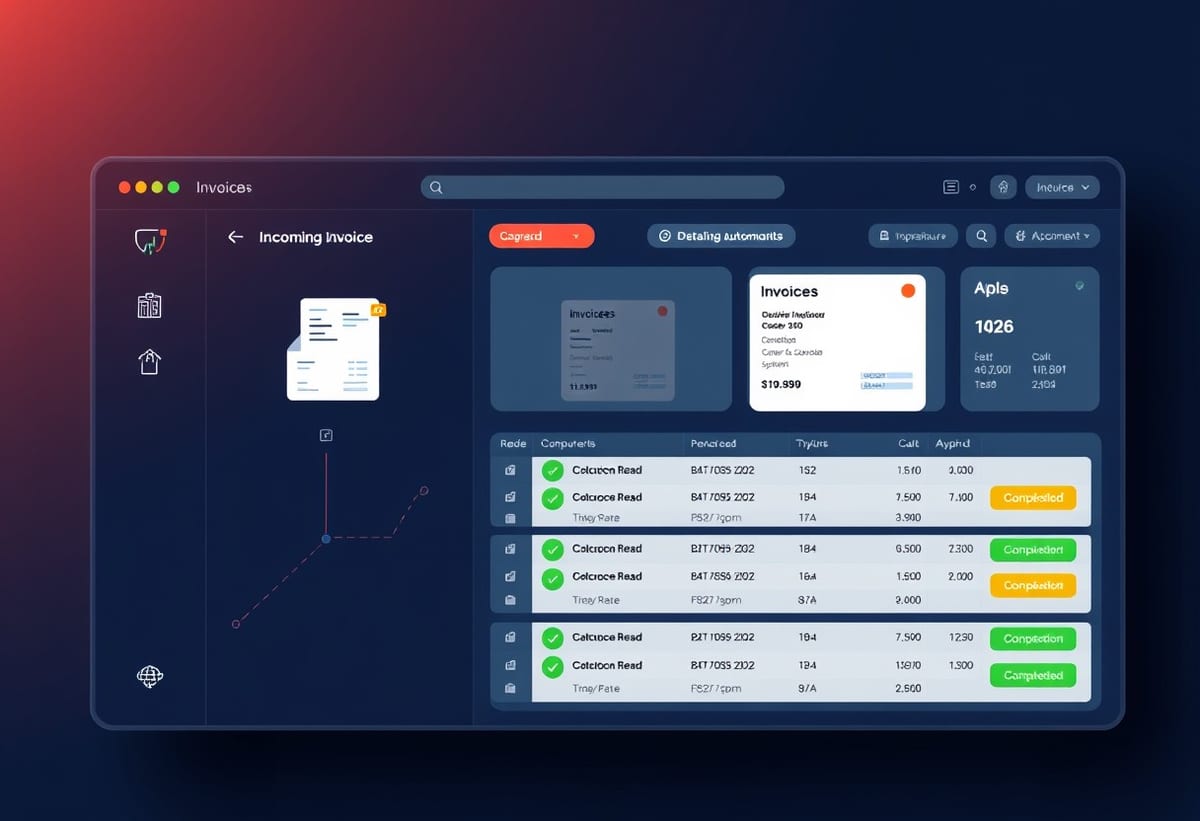
What you build: A document processing pipeline that automatically reads incoming documents, extracts structured data (supplier name, invoice number, line items, totals, dates), and routes that data into your accounting or job management system. AI handles the reading and extraction. Your staff handle exceptions - the 5-10% of documents that are unusual or unclear.
The impact: A process that took 5 minutes per document now takes 30 seconds. For a business processing 200 invoices per month, that’s roughly 15 hours of staff time recovered - every month.
How it works in practice: Documents arrive by email or upload. The system uses AI to read and extract data, pre-fills a record in your system, and flags anything it’s not confident about for human review. Your team reviews exceptions, approves the rest, and moves on. The AI learns from corrections, improving over time.
2. Customer Enquiry Triage and Routing
When a customer sends an email or submits a form, it typically sits in a general inbox until someone manually reads it, decides who should handle it, and forwards it. Response times suffer. Urgent enquiries get missed.
What you build: An automated triage system that reads incoming enquiries, categorises them (sales, support, complaint, billing, technical), assigns priority based on content and customer status, and routes them to the right person or team. Urgent issues get flagged. Common questions get instant AI-generated responses with human oversight.
The impact: Response times drop from hours to minutes for routine enquiries. Your team handles only the enquiries that need human judgement. Customers get faster, more accurate responses.
How it works in practice: The AI reads each incoming message, classifies it, and either responds automatically (for common questions like “what are your opening hours?” or “how do I reset my password?”) or routes it to the appropriate team member with a priority flag and a suggested response draft. Every AI response is logged and can be reviewed.
3. Automated Reporting and Insights
Most SMEs run on reports that someone compiles manually - weekly sales figures, monthly job profitability, quarterly performance summaries. A manager spends half a day pulling data from multiple systems, pasting it into spreadsheets, and formatting it into something presentable.
What you build: A reporting engine that automatically pulls data from all your connected systems, generates reports on a schedule, and uses AI to highlight anomalies, trends, and actionable insights. Instead of “sales were £45,000 last week,” you get “sales were £45,000, up 12% week-on-week, driven by three large orders from the construction sector - your pipeline suggests this trend will continue.”
The impact: Reporting goes from a weekly chore to a continuous, automatic process. Managers spend time acting on insights rather than compiling data. Decisions happen faster because the information is always current.
How it works in practice: The system aggregates data from your CRM, accounting, and job management systems on a schedule - daily, weekly, or monthly. AI identifies patterns and anomalies, generates natural-language summaries, and delivers them via email or dashboard. Your team gets the “so what” alongside the numbers.
4. Smart Job Scheduling and Resource Allocation
For service businesses - construction, maintenance, consulting, healthcare - scheduling is a daily puzzle. Who goes where? In what order? What if a job overruns? What if someone calls in sick? A human scheduler spends hours each day optimising routes and assignments, and still can’t account for every variable.
What you build: An intelligent scheduling system that considers job location, duration, required skills, travel time, priority, and resource availability to generate optimal daily schedules. When conditions change - a job overruns, an emergency call comes in, someone is unavailable - the system recalculates and suggests adjustments.
The impact: Reduced travel time, better resource utilisation, faster response to changes, and fewer scheduling conflicts. For a team of 10 field workers, even a 10% improvement in routing efficiency saves roughly 20 hours of driving time per month.
How it works in practice: The system pulls job data, resource availability, and location data, runs optimisation algorithms, and presents a recommended schedule. The scheduler reviews, makes adjustments, and publishes. When disruptions occur, the system suggests re-allocations in real time rather than leaving the scheduler to rebuild the day from scratch.
5. Predictive Cash Flow Management
Cash flow is the thing that keeps SME owners awake at night. Most manage it reactively - checking the bank balance, chasing overdue invoices, hoping this month’s payments arrive before this month’s bills are due.
What you build: A cash flow forecasting system that analyses your invoicing patterns, payment histories, seasonal trends, and upcoming commitments to predict your cash position weeks and months ahead. When the system sees a potential shortfall approaching, it alerts you early - while you still have time to do something about it.
The impact: You stop reacting to cash flow crises and start managing them proactively. Late payments are chased automatically before they become a problem. Spending decisions are made with full visibility of what’s coming.
How it works in practice: The system connects to your accounting software, analyses historical payment patterns, and builds a forecast model. It identifies invoices likely to be paid late based on customer history, triggers automated follow-ups at the right intervals, and gives you a rolling 4-12 week cash position forecast with confidence ranges.
Building Automation Into Your Software
These workflows share a common pattern: they take a manual, repetitive, judgement-based process and automate the routine parts while keeping humans in the loop for exceptions and final decisions. That is where AI automation delivers the most value - not replacing people, but removing the tedious 80% so your team can focus on the critical 20%.
When you build custom software, these automations are designed into the system from the start. No bolt-ons, no workarounds, no third-party plugins that might stop working when the vendor updates their API. The automation is part of the architecture.
Start with one workflow - the one that causes the most pain or wastes the most time. Get it working. Measure the impact. Then build the next one. Each automation compounds on the last, and the cumulative time savings across your business add up faster than you might expect.
Recommended Reading
- Workflow Automation: Replacing Manual Processes with Software - How to identify and prioritise processes for automation.
- How AI Accelerates Software Development - The technology making bespoke automation affordable for SMEs.
- Custom API Development: Connecting Your Business Systems - The APIs that make workflow automation possible.
Get Started with AI Automation
If you want to explore how AI automation could work in your business, book a free 30-minute discovery call. We will talk through your workflows and identify which ones are the best candidates for automation. You can also read more about our AI automation services UK, explore our industry-specific solutions, or take our free software readiness quiz to see if your business is ready for custom software.