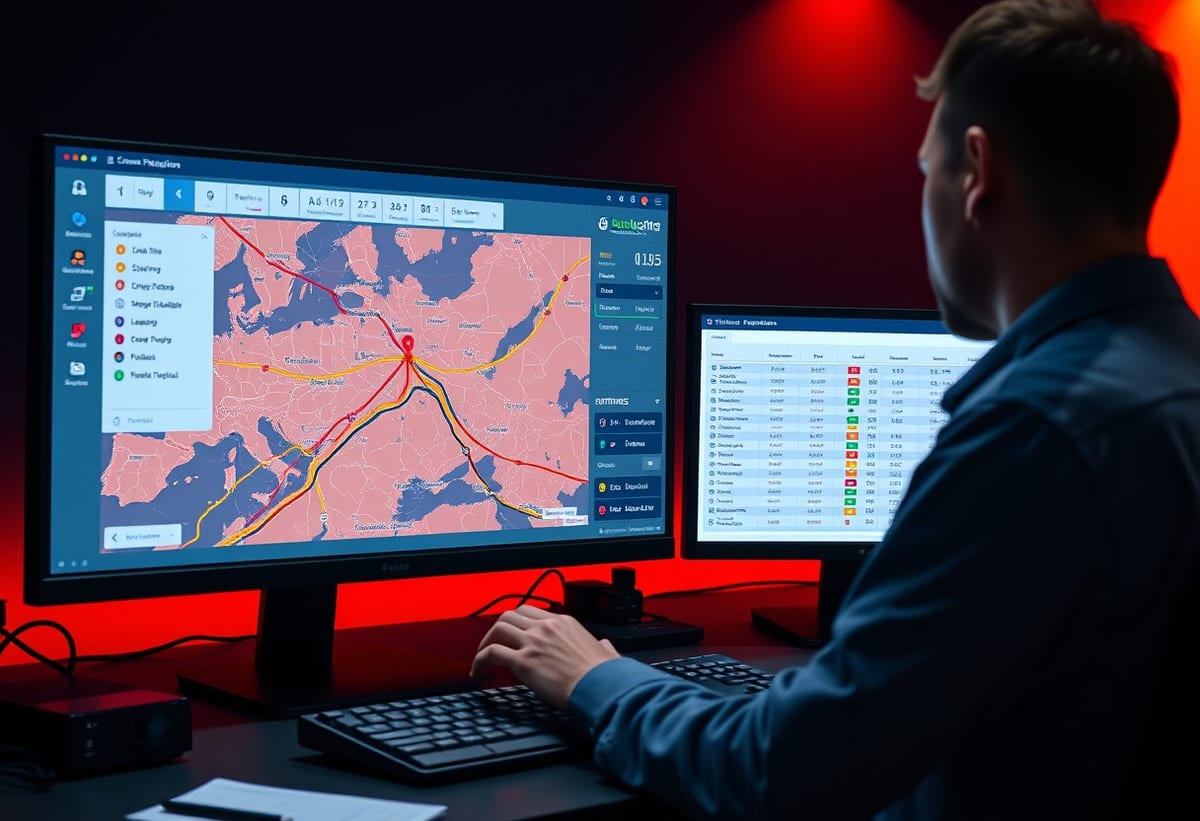
Bespoke software for UK logistics companies delivers fleet and route management systems built around your specific operations, your fleet, and your delivery patterns. The UK logistics sector is under intense pressure from rising fuel costs, driver shortages, and customer expectations for faster, more visible deliveries. ONS data shows that UK transport and storage businesses face operating costs that have risen 18% since 2022, making efficiency gains through software not just desirable but essential for survival.
Why Do UK Logistics Companies Need Custom Software?
Generic Fleet Management Tools Have Limits
Off-the-shelf fleet management software covers the basics: vehicle tracking, driver hours, and basic reporting. But logistics companies have specific needs that generic tools cannot address. Your delivery schedule, your depot structure, your vehicle types, and your customer requirements are unique to your business. Generic software forces you to adapt your operation to the software. Custom software adapts to your operation.
Route Optimisation Is Not One-Size-Fits-All
Every logistics company has different route optimisation needs. A same-day delivery service in a city needs different optimisation from a national pallet network. A temperature-controlled food delivery operation needs routes that account for time windows and cold chain compliance. A multi-drop furniture delivery service needs routes that account for vehicle capacity and two-person delivery teams.
Generic route planning tools handle the simple cases. When your requirements include time windows, vehicle constraints, multi-depot operations, or specialist handling, custom route optimisation software delivers better results. According to the Freight Transport Association, efficient route planning can reduce mileage by 10% to 15%, saving a typical SME logistics company £30,000 to £75,000 per year in fuel and driver costs.
Customer Visibility Is Expected
Customers now expect to track their deliveries in real time, receive automated notifications, and get accurate delivery windows. If you cannot provide this, you lose business to competitors who can. A custom logistics system can include a customer-facing portal with real-time tracking, automated SMS and email notifications, and proof of delivery. Our custom web portal services build these customer-facing platforms.
Your Systems Do Not Talk to Each Other
Most logistics companies run separate systems for fleet management, route planning, warehouse management, and customer communication. When these systems do not integrate, your team spends time manually moving data between them. A custom system can unify these functions or build integrations between your existing tools. Our system integration services handle this kind of connectivity.
What Can Bespoke Logistics Software Do?
Route Optimisation
Custom route optimisation that accounts for your specific constraints: vehicle types, driver hours, time windows, multi-drop sequences, depot locations, and traffic patterns. The system generates optimal routes automatically, reducing mileage, fuel costs, and delivery times.
Fleet Management
Track vehicle location, driver hours, maintenance schedules, and fuel consumption. Receive alerts for maintenance due, driver hours approaching limits, and vehicles off route. Custom fleet management gives you a complete picture of your fleet in real time.
Warehouse and Depot Management
Manage inbound and outbound freight, track pallet and package locations, and coordinate loading and unloading. A custom warehouse system can be tailored to your depot layout and your handling requirements.
Customer Portal and Tracking
A branded customer portal where clients can book deliveries, track shipments in real time, receive automated notifications, and access proof of delivery. This replaces phone-based updates and gives your customers the visibility they expect.
Driver Mobile App
A mobile app for drivers that provides turn-by-turn navigation, delivery instructions, proof of delivery capture, and real-time status updates. Drivers do not need to call the office for instructions or paperwork. Everything is handled in the app, with data flowing back to the central system in real time. Our mobile app development services build these field-force applications.
Proof of Delivery and Electronic Proof of Collection
Digital proof of delivery with signature capture, photo evidence, and time stamping. No more paper delivery notes that get lost or damaged. All proof of delivery data is stored electronically and accessible instantly.
For logistics companies serving B2B customers, proof of collection is equally important. When a driver collects goods from a supplier, digital proof of collection provides an immediate record that the goods were received in the stated condition. This eliminates disputes about damage or short delivery, which are a common source of friction in logistics contracts.
Automated Customer Notifications
Automated notifications at every stage of the delivery process. Customers receive a confirmation when the order is dispatched, a notification when the driver is on the way with an estimated arrival time, and a final notification when the delivery is complete. This level of communication, which customers now expect from all delivery services, reduces inbound calls to your office and improves customer satisfaction. According to YouGov research, 73% of UK consumers say delivery communication influences their likelihood of using a company again.
How Much Does Custom Logistics Software Cost?
Route Optimisation and Fleet Tracking
A system covering route planning, vehicle tracking, and basic reporting. Typically £25,000 to £50,000.
Full Logistics Platform
A full system including route optimisation, fleet management, warehouse management, customer portal, and driver app. Typically £50,000 to £120,000.
Enterprise Logistics System
A complete platform with advanced features like predictive analytics, automated dispatching, and multi-depot operations. Typically £100,000 to £250,000.
The comparison is against the cost of inefficiency. If custom route optimisation saves 12% on mileage, and your annual fuel and driver cost is £300,000, that is £36,000 per year in savings. A £50,000 system pays for itself in under 18 months. Our guide on custom software vs SaaS total cost of ownership covers this kind of cost-benefit analysis.
How Long Does Development Take?
- Process mapping and specification: 2 to 4 weeks
- System design: 2 to 3 weeks
- Core platform development: 10 to 20 weeks
- Driver app development: 6 to 12 weeks
- Testing and pilot: 4 to 8 weeks
Total elapsed time is typically 24 to 47 weeks for a full platform. For a focused system covering just route optimisation and fleet tracking, the timeline is shorter, typically 12 to 20 weeks. The approach is to start with the highest-impact function, usually route optimisation, and build out from there.
What Integration Considerations Are Important?
Telematics and Vehicle Tracking
Most logistics companies already have telematics hardware in their vehicles. Custom software should integrate with existing telematics rather than requiring new hardware. Major telematics providers like Webfleet, MiX Telematics, and Quartix all offer APIs that custom software can use.
TMS and ERP Integration
Your logistics system should integrate with your transport management system (TMS) and ERP. Orders flow from the TMS or ERP into the route optimisation system, and delivery status flows back. This eliminates manual order entry and ensures your ERP always has current delivery status.
Customer Systems
Some customers, particularly large retailers, require electronic data interchange (EDI) or API integration for order placement and delivery confirmation. A custom system can support these integration requirements, which generic tools often cannot.
Recommended Reading
- System Integration for UK SMEs - Connecting logistics software with TMS, ERP, and telematics systems.
- Mobile App Development for UK SMEs - The driver app that gives your field force mobile access.
- Workflow Automation: Replacing Manual Processes with Software - Automating dispatch, notification, and reporting workflows.
Next Steps
If your logistics operation is losing money to inefficient routing, manual processes, or lack of customer visibility, bespoke software can transform your efficiency. Explore our software for logistics solutions to understand what is possible, or book a free discovery call to discuss your specific operation. Our bespoke software development services provide the full range of custom software capabilities your logistics business may need.